


Building circular economy industrial models for future
Shifting industries towards circular economy industrial models is vital for future sustainability. We examine practical implementation, challenges, and success strategies globally.
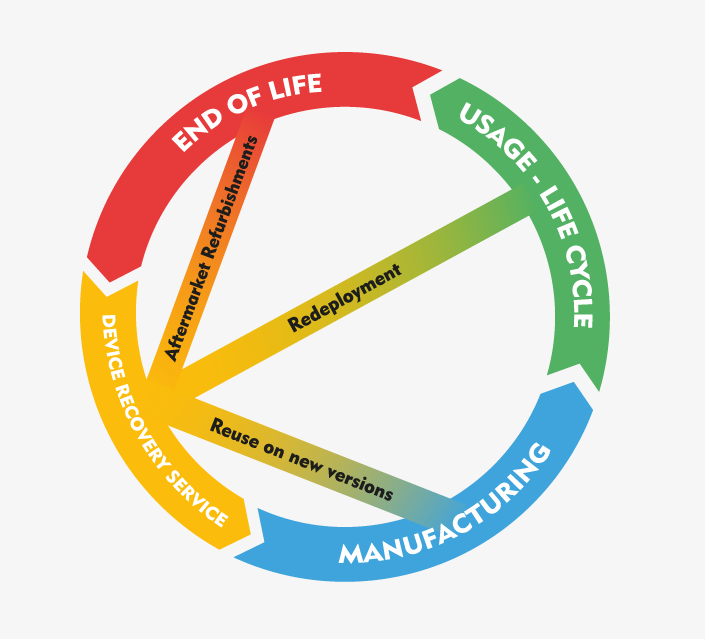
The global industrial landscape faces immense pressure from resource scarcity and environmental impact. My experience in industrial operations has shown me that linear “take-make-dispose” approaches are simply unsustainable. Moving towards circular economy industrial models is not just an environmental imperative; it is a strategic business necessity. It reshapes how we design, produce, and consume, creating value from what was once considered waste. This shift demands systemic thinking and practical innovation across entire value chains.
Overview
- Circular economy industrial models redefine value creation by keeping resources in use for longer periods.
- They move beyond waste management to eliminate waste and pollution by design.
- Implementing these models requires redesigning products, processes, and entire business ecosystems.
- Challenges include initial investment, supply chain complexity, and the need for new skill sets.
- Success relies on strong collaboration, policy support, and technological adoption.
- These models offer significant benefits, including resource security, economic resilience, and reduced environmental footprints.
- Future growth in this area will be driven by digitalization, material innovation, and evolving consumer demands.
Understanding Circular Economy Industrial Models in Practice
From my perspective in manufacturing and supply chain optimization, circular economy industrial models represent a fundamental paradigm shift. They move away from the traditional linear economy, where materials are extracted, manufactured into products, used, and then discarded. Instead, circular models focus on regenerating natural systems, keeping products and materials in use, and designing out waste and pollution. This means designing products for durability, reuse, repair, and eventual remanufacturing or recycling.
A core principle involves closing material loops. This isn’t just about recycling; it is about designing products and systems where materials retain their highest value. We see this in companies using modular designs for electronics, allowing for easy component replacement. Another example is textile companies that take back worn clothing to process into new fibers. These models require a deep understanding of material science and process engineering. They often involve entirely new business propositions, such as product-as-a-service, where companies retain ownership and responsibility for their products throughout their lifecycle.
Operationalizing Resource Loops and System Design
Operationalizing these resource loops involves a critical examination of every stage of a product’s life. Initially, it means selecting materials that are renewable, recyclable, or biodegradable. For instance, my work often involves evaluating supply chains for their capacity to supply secondary raw materials. This ensures that a product’s components can be recovered and reused. Process design also plays a major role, aiming for minimal energy and water consumption and zero production waste.
Industrial symbiosis is another powerful operational strategy. Here, waste or by-products from one industrial process become raw materials for another. This is gaining traction in industrial parks where companies co-locate to share resources. In the US, some states are actively promoting these clusters, seeing the economic and environmental benefits. Companies are also adopting servitization models. Instead of selling a product, they sell the function it provides. For example, a lighting company might sell light as a service, maintaining ownership of the fixtures and components. This incentivizes design for longevity and easy maintenance, directly aligning with circular principles.
Overcoming Challenges in Adopting Circular Economy Industrial Models
Implementing circular economy industrial models is not without its hurdles. One significant challenge is the upfront investment required for new infrastructure, research, and development. Shifting away from established linear processes demands capital for redesigning facilities and retraining personnel. Another barrier lies in complex supply chain management. Establishing reverse logistics for product collection, sorting, and processing materials adds layers of complexity. Many existing supply chains are optimized for one-way flow, not for circularity.
Furthermore, consumer behavior can be a factor. Educating consumers about the benefits of repair, reuse, and shared ownership is crucial. Regulatory frameworks also need to evolve to support these new models, offering incentives and standardizing practices. Collaborating across industries is essential. No single company can build a fully circular system alone. This necessitates strong partnerships with suppliers, customers, and even competitors. Overcoming these challenges requires strategic planning, policy support, and a commitment to long-term value creation.
The Future Trajectory of Circular Economy Industrial Models
The trajectory for circular economy industrial models points towards increased integration and technological innovation. Digitalization will play a pivotal role, enabling better tracking of materials, product lifecycle management, and optimizing resource flows. Technologies like the Internet of Things (IoT) and artificial intelligence (AI) can monitor product performance and predict maintenance needs, extending useful life. Blockchain can provide transparency in material provenance and recycling efforts.
Policy will continue to be a significant driver. Governments globally are setting targets for waste reduction and resource efficiency, pushing industries towards circularity. This creates a more level playing field and rewards innovative circular businesses. Ultimately, the future involves more resilient and regenerative industrial systems. These systems will not only reduce environmental harm but also create new economic opportunities and strengthen supply chain security. The shift is not merely about compliance; it is about building a more sustainable and prosperous industrial future.

