
Using cohort analysis for retention improvement gains

Leverage cohort analysis for retention improvement by understanding user behavior patterns. Drive better engagement and growth.

From years of experience in product and growth roles, the challenge of retaining customers is universal. Many businesses collect vast amounts of data, yet struggle to translate it into actionable strategies. We often see symptoms like declining active users or poor subscription renewal rates, but pinpointing the root cause remains elusive. This is where cohort analysis for retention improvement becomes an invaluable tool, shifting focus from aggregated numbers to specific user segments over time.

Overview

  • Cohort analysis for retention improvement groups users by a shared characteristic, typically their signup or purchase date.
  • This method reveals how different user groups behave over successive periods.
  • It moves beyond overall metrics to pinpoint specific dips or gains in retention for particular cohorts.
  • Early identification of issues allows for targeted interventions and experiments.
  • Understanding lifecycle patterns helps tailor onboarding, engagement, and win-back strategies.
  • Regular cohort reviews provide critical insights into the long-term health and value of customer segments.
  • Companies can prioritize resources by focusing on cohorts with the greatest potential for retention gains.

Understanding Customer Behavior Through Cohorts

My initial exposure to cohort analysis came during a period of stagnating growth at a mobile app company. We knew overall retention was poor, but couldn’t isolate why. Aggregated metrics offered little insight. By grouping users based on their installation week, we suddenly saw stark differences. Users acquired through specific ad campaigns, for example, retained at a significantly lower rate than those from organic search. This simple segmentation was an eye-opener.

A cohort is essentially a group of users sharing a common characteristic or experience within a defined timeframe. The most common characteristic is the acquisition date, but it could also be the product version they started with, the marketing channel that brought them in, or even the feature they first used. By tracking these groups independently, we observe their behavior patterns over subsequent periods. For instance, we can see what percentage of users who joined in January are still active in February, March, and so on, comparing this to the February cohort’s performance.

This granular view helps identify trends and anomalies that would be masked by looking at overall metrics. If one cohort shows a steep drop-off after the first week, it signals a problem with the initial user experience or immediate value proposition for that specific group. Conversely, if a particular cohort shows unusually high retention, we can investigate what made that group unique and try to replicate those conditions. This shifts the conversation from “retention is bad” to “retention for users acquired via X channel in Y month is specifically concerning after Z action.”

Implementing Cohort analysis for retention improvement Strategies

Applying cohort analysis for retention improvement requires a systematic approach. Once we identified the low-retaining cohorts, our next step was experimentation. For the US market, we noticed that users acquired through partner referrals had a quick churn. We hypothesized that their onboarding experience wasn’t tailored to their referral source. Instead of a generic welcome flow, we introduced a personalized message referencing the partner and highlighting specific features relevant to that referral’s audience.

The key lies in linking observed cohort behavior back to specific actions or features. If a cohort shows declining engagement after a particular product update, we have a strong indicator that the update might have negatively impacted their experience. This allows us to quickly roll back, iterate, or offer specific support to that affected group. We used A/B testing extensively with different cohorts. For instance, one cohort received an educational email series, while another received push notifications for new features. The cohort analysis then revealed which intervention had a more positive impact on their long-term retention.

This iterative process of analysis, hypothesis, intervention, and re-analysis is critical. It’s not a one-time setup; it’s an ongoing cycle. We learned to segment not just by acquisition date but also by in-app behavior—e.g., cohorts of users who completed a specific tutorial versus those who skipped it. This deeper segmentation provides more precise targets for retention efforts. Each successful intervention, even small ones, builds a more resilient customer base.

Advanced Techniques in Cohort analysis for retention improvement

Moving beyond basic acquisition cohorts, my teams started exploring more sophisticated applications of cohort analysis for retention improvement. One powerful technique involves “event-based cohorts.” Instead of grouping users by signup date, we group them by the date they performed a specific action, like their first purchase, their first share, or their first successful completion of a core task. This allows us to understand the retention patterns after key conversion points. For example, how does retention look for users who made their first purchase this month versus last month? Did a recent pricing change impact their subsequent activity?

Another advanced application is the “rolling retention” view. This measures the percentage of users from a cohort who remain active over time, rather than just returning. This is particularly useful for subscription services where continuous engagement is vital. We also began segmenting by customer lifetime value (CLV) within cohorts. This reveals if specific acquisition channels or onboarding flows consistently bring in users with higher long-term value, even if their initial retention metrics appear similar to lower-value cohorts. This deeper insight helps in optimizing marketing spend.

The use of “behavioral cohorts” further refines our understanding. For instance, creating a cohort of users who actively use feature X versus those who don’t, and then comparing their retention curves. This helps validate product roadmap decisions and understand the true impact of feature adoption on user longevity. We even experimented with “survivor cohorts,” looking at the characteristics of users who do remain active for a long time to identify common traits that can be fostered in newer users.

Measuring Success with Applied Retention Strategies

The true measure of any retention strategy lies in its impact on key performance indicators (KPIs). When we applied targeted strategies based on cohort insights, we tracked metrics beyond just overall retention percentages. We looked at average revenue per user (ARPU) for specific cohorts, customer lifetime value (CLV) projections, and churn rates within defined segments. For instance, a strategy aimed at improving retention for new users in the first week might specifically track the “Day 7 Retention Rate” for impacted cohorts.

We always ensured our metrics were tied directly to the cohort showing improvement. If we ran an onboarding experiment for users acquired in Q1, we would meticulously compare their 30-day, 60-day, and 90-day retention rates against Q4 users who did not receive the intervention. This direct comparison provides clear evidence of strategy effectiveness. Small, incremental gains across multiple cohorts can lead to significant overall business health improvements. It’s about building a robust data culture where every retention effort is measurable and attributable to a specific cohort. This structured measurement framework provided the necessary feedback loop to continuously refine our approach and demonstrate tangible business value.

Proven Growth hacking strategies for online brands

Practical, experience-backed Growth hacking strategies for online brands to scale user acquisition & retention. Actionable tactics for market impact.

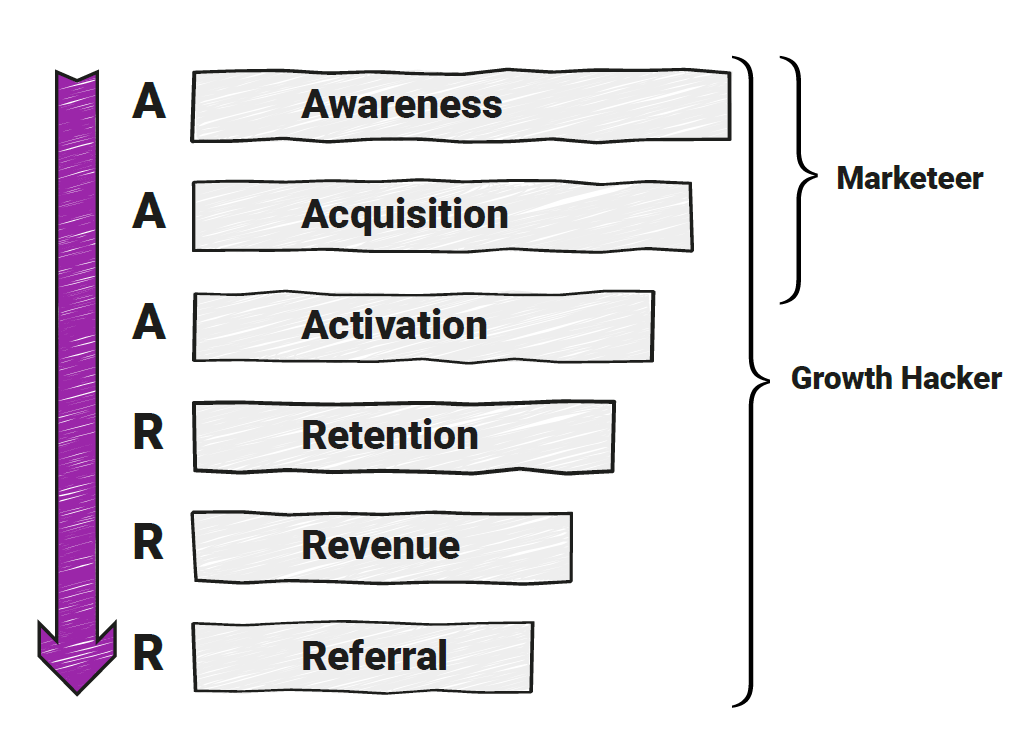
In my years working with online businesses, I’ve seen firsthand that sustainable growth doesn’t come from a single “magic bullet” but from a relentless cycle of experimentation and optimization. For online brands, this means moving beyond traditional marketing plans and adopting agile, data-driven methods. This approach, often termed growth hacking, focuses on rapid iteration to identify the most efficient paths to scale. It’s about being lean, adaptable, and deeply analytical in every marketing and product decision.

Overview

  • Growth hacking for online brands prioritizes rapid experimentation over long-term campaigns.
  • Data analytics forms the backbone of all effective growth initiatives.
  • Customer retention and referral programs are as crucial as new customer acquisition.
  • Successful strategies often involve A/B testing, personalization, and conversion rate optimization.
  • Understanding the customer journey from awareness to advocacy is fundamental.
  • Leveraging community and user-generated content can significantly boost organic reach.

Leveraging Data for Effective Growth hacking strategies for online brands

At the core of any successful Growth hacking strategies for online brands is an obsession with data. We don’t guess; we test. My team and I consistently start by defining clear metrics – what we call Key Performance Indicators (KPIs). These might include customer acquisition cost (CAC), customer lifetime value (LTV), or conversion rates at various funnel stages. For instance, in the US market, understanding regional purchasing behaviors through analytics can pinpoint where to allocate marketing spend more effectively.

Collecting and interpreting user behavior data is non-negotiable. Tools like Google Analytics, Mixpanel, or custom dashboards allow us to track everything from website clicks to product engagement. This data helps identify bottlenecks in the user journey. Perhaps users drop off at a specific checkout step, or a particular landing page has a low bounce rate but poor conversion. Data points us directly to these issues, enabling targeted improvements rather than broad assumptions. Without a strong data foundation, growth hacking is just guesswork.

Experimentation-Driven Growth hacking strategies for online brands

The ethos of growth hacking is continuous experimentation. This involves forming hypotheses, designing tests, analyzing results, and implementing findings. We frequently employ A/B testing on everything from ad creatives and headlines to email subject lines and product page layouts. A small tweak to a call-to-action button, for example, can sometimes yield surprising increases in conversion rates. This isn’t about grand campaigns; it’s about numerous small, impactful optimizations.

One practical example involves optimizing onboarding flows. We once experimented with reducing the number of form fields during sign-up for an e-commerce brand. Initial concerns about data quality were outweighed by a significant increase in successful registrations. The key was to gather only essential information upfront and progressively collect more details as the user engaged further. These iterative changes, driven by real user response, are characteristic of effective Growth hacking strategies for online brands.

Retention and Referral Tactics for Online Success

Acquiring new customers is vital, but retaining existing ones is often more cost-effective and contributes significantly to long-term growth. From my experience, online brands that master customer retention build a more resilient foundation. We focus on strategies like personalized email campaigns, loyalty programs, and exceptional customer service. Sending targeted follow-up emails after a purchase, offering exclusive discounts to repeat buyers, or simply providing quick, helpful support can dramatically improve customer loyalty.

Referral programs are another powerful tool. Happy customers are your best marketers. By incentivizing existing users to invite new ones, brands can tap into trusted networks. This lowers customer acquisition costs and brings in higher-quality leads. For example, a “give $10, get $10” model has proven effective across various online sectors. Building a strong community around the brand also encourages organic word-of-mouth, which is invaluable. These retention and referral tactics amplify growth by turning customers into advocates.

Scaling Paid Acquisition with Growth hacking strategies for online brands

While organic methods are crucial, paid acquisition remains a cornerstone for many online brands seeking rapid scale. The growth hacking approach to paid channels, however, is far from traditional ad buying. It’s about micro-experimentation, precise targeting, and continuous optimization. We constantly test new ad platforms, audience segments, and creative variations. This might involve exploring niche social media platforms, experimenting with different ad formats on Google, or leveraging influencer collaborations.

Performance marketers on my team are always looking for marginal gains. This means diligently tracking campaign performance and being ready to pause underperforming ads or scale up successful ones instantly. We don’t just set and forget campaigns. Instead, we use real-time data to adjust bids, refine targeting parameters, and iterate on ad copy to maximize return on ad spend. This agile, data-centric strategy is essential for making paid acquisition a genuinely scalable engine for an online brand’s expansion.

Key updates in SaaS pricing and subscription model trends

Explore the latest Updates in SaaS pricing and subscription model trends, focusing on value-based approaches, usage-based billing, and hybrid strategies impacting US businesses.

The landscape of SaaS pricing and subscription models is in constant flux. As businesses mature and customer expectations evolve, companies must adapt their strategies to remain competitive and foster sustainable growth. This isn’t just about setting a price; it’s about aligning value, usage, and customer success in a dynamic market. From my vantage point, seeing countless SaaS companies in the US navigate these waters, clear patterns emerge.

Overview

  • SaaS pricing is moving beyond simple per-user models toward more flexible, value-aligned approaches.
  • Usage-based pricing is gaining significant traction, directly tying cost to consumption and perceived value.
  • Hybrid models combine elements of fixed subscriptions with variable usage fees to suit diverse customer needs.
  • Customer lifetime value (CLV) and churn reduction are central to modern pricing strategies.
  • Companies are increasingly focused on transparent pricing and predictable billing for better customer relations.
  • Strategic bundling and tiered offerings help cater to different market segments and business sizes.
  • Data analytics plays a crucial role in optimizing pricing tiers and identifying growth opportunities.

The Shift to Value-Based Pricing: Updates in SaaS pricing and subscription model trends

Traditional per-user pricing, while straightforward, often fails to capture the true value a software delivers. Many Updates in SaaS pricing and subscription model trends point to a pronounced shift towards value-based pricing. Here, the cost is tied to the outcomes or benefits a customer receives, rather than just access. This could mean pricing based on the number of projects managed, transactions processed, or even data points analyzed.

For instance, a marketing automation platform might charge based on the number of active contacts or leads generated, directly reflecting the potential revenue impact for the client. This approach requires a deep understanding of customer segments and their specific needs. It encourages vendors to continually demonstrate their product’s ROI, building stronger, trust-based relationships. The goal is to make the pricing feel fair and directly proportional to the perceived success gained from using the software. This also helps in reducing churn as customers directly see the benefit aligned with their spend.

Usage-Based Models and Their Impact: Updates in SaaS pricing and subscription model trends

Another significant development in Updates in SaaS pricing and subscription model trends is the rise of usage-based models. This approach charges customers based on how much they actually use the service. Think of cloud infrastructure providers billing by data storage, API calls, or compute time. The appeal for customers is clear: they only pay for what they consume, which can be highly attractive for startups or businesses with fluctuating needs.

From the vendor’s perspective, usage-based pricing can lead to significant revenue expansion. As customers grow and use more of the product, revenue naturally scales with them. It incentivizes product teams to build features that drive deeper engagement and usage. However, it also demands robust metering and billing systems to ensure accuracy and transparency. Communicating potential costs clearly is vital to avoid sticker shock and maintain customer satisfaction. Companies often implement “guardrails” like free tiers or committed usage discounts to manage predictability.

Hybrid Approaches and Customer Retention: Key Updates in SaaS pricing and subscription model trends

The current market rarely sees a pure implementation of a single pricing model. Most Updates in SaaS pricing and subscription model trends involve sophisticated hybrid approaches. These models combine elements of fixed subscriptions with variable usage or value-based components. For example, a customer might pay a base subscription fee for core features and then incur additional charges for exceeding certain usage thresholds, adding premium modules, or accessing advanced support.

This hybridity allows SaaS providers to cater to a broader range of customer needs and business sizes. It provides a baseline of predictable revenue while allowing for upsides as customers scale their operations. A common hybrid strategy in the US involves tiered plans (e.g., Basic, Pro, Enterprise) where each tier offers different feature sets, usage allowances, and support levels. Effective hybrid models focus on reducing churn by offering flexibility and ensuring customers feel they are getting value at every stage of their growth. This strategy inherently prioritizes customer retention, as flexibility often translates to prolonged engagement.

Adapting to Market Dynamics and Customer Expectations

The dynamism in SaaS pricing reflects broader market forces and evolving customer expectations. Customers demand flexibility, transparency, and a clear connection between what they pay and the value they receive. This shift is particularly evident in competitive markets where companies strive to differentiate beyond just features. Pricing becomes a strategic lever, not merely a numerical exercise.

Businesses must constantly analyze data on customer behavior, feature adoption, and churn rates to refine their models. A willingness to iterate and experiment with different pricing structures is crucial. This might involve A/B testing price points, adjusting tier inclusions, or even restructuring entire billing methodologies. Understanding regional nuances within the US market and global economic pressures also plays a role. Successful SaaS companies today view pricing as an ongoing dialogue with their market, always seeking alignment and mutual benefit.

Maximizing customer lifetime value CLV optimization

Strategies for maximizing customer lifetime value (CLV) optimization. Learn practical methods for increasing loyalty, retention, and revenue.

In today’s competitive market, merely acquiring new customers is often insufficient for sustainable growth. Forward-thinking businesses are shifting focus towards nurturing existing relationships to maximize their worth. This approach, known as Customer lifetime value (CLV) optimization, is a critical strategy for long-term profitability and market resilience. It’s about understanding and improving the total revenue a business can expect from a single customer relationship over its entire duration. From my experience, effective CLV optimization isn’t just theory; it requires actionable insights and a commitment to customer-centric practices.

Overview

  • Customer lifetime value (CLV) optimization focuses on increasing the total revenue generated from each customer.
  • It involves strategic efforts in customer acquisition, retention, and loyalty programs.
  • Data analytics plays a crucial role in segmenting customers and predicting future behavior.
  • Personalization of communications and offers significantly improves customer engagement.
  • Exceptional customer experience across all touchpoints is fundamental to extending customer relationships.
  • Implementing feedback loops and iterative improvements ensures continuous growth in customer value.
  • A holistic view of the customer journey is essential for identifying CLV enhancement opportunities.

Understanding the Core of CLV

At its heart, CLV represents the net profit attributed to the entire future relationship with a customer. It moves beyond transactional thinking to embrace a relational perspective. Many companies, especially in the US, now prioritize this metric alongside traditional sales figures. Calculating CLV can be complex, involving historical purchase data, predicted future purchases, gross margin, and customer retention costs. Simpler models might average customer lifespan and spending. More sophisticated models incorporate predictive analytics and machine learning to forecast individual customer value with greater accuracy. This foundational understanding allows businesses to allocate resources more effectively. We learned early on that not all customers are created equal; some contribute significantly more over time. Identifying these segments is the first step.

Implementing Data-Driven Customer lifetime value (CLV) optimization Strategies

Effective Customer lifetime value (CLV) optimization relies heavily on robust data analysis. Businesses must collect and analyze data across various touchpoints, from initial website visits to post-purchase support. This data helps identify customer segments, understand purchasing patterns, and predict churn risks. For instance, analyzing buying frequency and product preferences allows for highly targeted marketing campaigns. Personalization is key; sending relevant offers, product recommendations, or loyalty rewards based on past behavior can dramatically extend customer relationships. This isn’t just about sending emails; it involves tailoring the entire customer journey. Think about customized onboarding processes or proactive problem-solving based on usage patterns. These data-driven tactics directly contribute to a longer, more valuable customer relationship.

Operationalizing Retention for Sustained Growth and Customer lifetime value (CLV) optimization

Retention is the bedrock of Customer lifetime value (CLV) optimization. It’s often cheaper to retain an existing customer than to acquire a new one. Operationalizing retention means embedding customer loyalty into every facet of the business. This includes superior customer service, prompt issue resolution, and proactive engagement. Building strong communities around a brand can also foster a sense of belonging and increase stickiness. Loyalty programs, tiered benefits, and exclusive access to new products are tangible ways to reward consistent engagement. We’ve seen firsthand how a well-structured loyalty program, coupled with exceptional service, can turn occasional buyers into brand advocates. The focus must always be on delivering consistent value beyond the initial transaction. This ensures customers feel appreciated and understood, motivating them to continue their patronage.

Measuring Impact and Iterating Customer lifetime value (CLV) optimization Efforts

Continuous measurement and iteration are vital for successful Customer lifetime value (CLV) optimization. Businesses need clear metrics to track the effectiveness of their strategies. Key performance indicators (KPIs) might include average purchase value, purchase frequency, customer churn rate, and actual CLV calculations. Regularly reviewing these metrics against implemented initiatives helps refine approaches. A/B testing different offers, communication channels, or loyalty incentives provides empirical evidence for what works best. For example, testing two different re-engagement campaigns can reveal which one yields higher repurchase rates. This iterative process allows for agile adjustments, ensuring that resources are always directed towards the most impactful CLV-driving activities. It’s a cycle of planning, execution, measurement, and adjustment that drives sustained growth.